The Vertical Trophy: Auckland's Pivot to High-Density Prestige.
How the National Policy Statement on Urban Development is creating a new class of vertical trophy assets in Auckland's premium corridors.

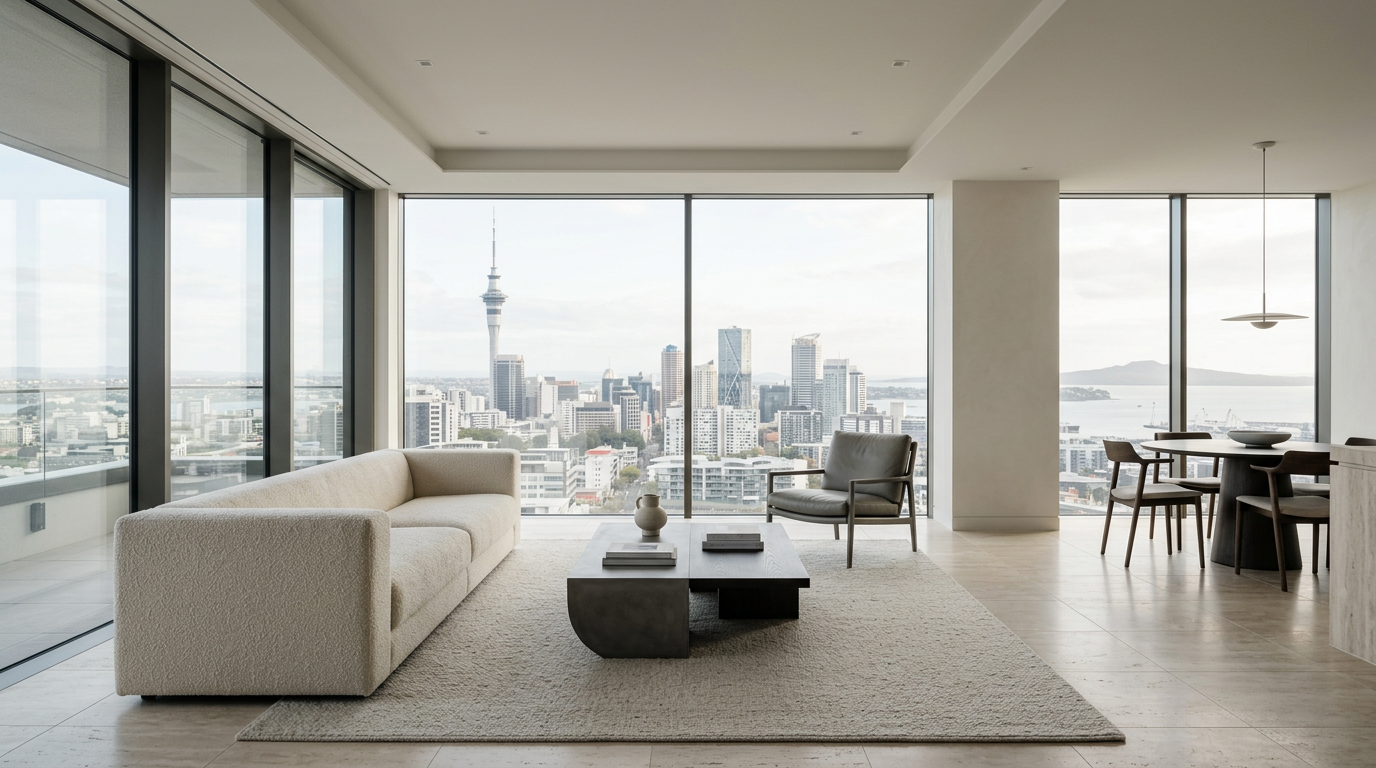
The Vertical Trophy: Auckland’s Pivot to High-Density Prestige
Introduction
For decades, the Auckland trophy asset was defined by sprawling estates in Remuera or coastal dominance in Herne Bay. However, a regulatory paradigm shift—driven by the National Policy Statement on Urban Development (NPS-UD)—is fundamentally altering the geometry of prestige. We are witnessing the emergence of the “Vertical Trophy,” where value is no longer derived from land acreage, but from volumetric sovereignty and strategic intensification.
Core Driver: The NPS-UD and Zoning Elasticity
The mandate for intensification in Tier 1 urban areas has stripped away the historical protections of low-density zoning. While the broader market views this as “density,” the ultra-prime sector views it as “opportunity for consolidation.” By leveraging new zoning laws, institutional investors are transitioning from managing disparate parcels to developing hyper-curated, high-rise prestige assets. The pivot is away from the horizontal sprawl and toward a curated verticality that prioritizes architectural signature over garden size.
Investor Implications: From Land Banking to Yield Optimization
The traditional “buy and hold” strategy for Auckland’s prime suburbs is facing a valuation inflection point. “Brown discounting” is becoming a reality for aging estates that lack the structural or zoning flexibility to adapt to intensification. Conversely, assets that can be pivoted into high-density, ultra-luxury configurations are seeing significant cap rate compression. The new alpha lies in the “Assemblage Play”—consolidating fragmented titles to create a singular, high-value vertical footprint.
Actionable Strategy: The Volumetric Play
Investors should prioritize assets within the NPS-UD’s intensification zones that offer “air rights” potential. The strategy is to identify underutilized legacy sites with high view sovereignty and pivot them into limited-edition, ultra-luxury vertical residences. The goal is to create scarcity in a high-density environment: fewer units, higher specifications, and absolute control over the vertical plane.
Conclusion
The Auckland market is migrating from a land-centric model to a volumetric one. The “Vertical Trophy” is not merely a residential building, but a strategic hedge against urban sprawl and a capture of the new luxury density. Those who cling to the horizontal will find their assets depreciating; those who pivot vertically will define the next era of Auckland’s prime real estate.