The Retrofit Alpha: Engineering ESG into London's Legacy Assets.
A deep-dive into the technical and financial strategies for upgrading London's historic ultra-prime properties to modern ESG standards.

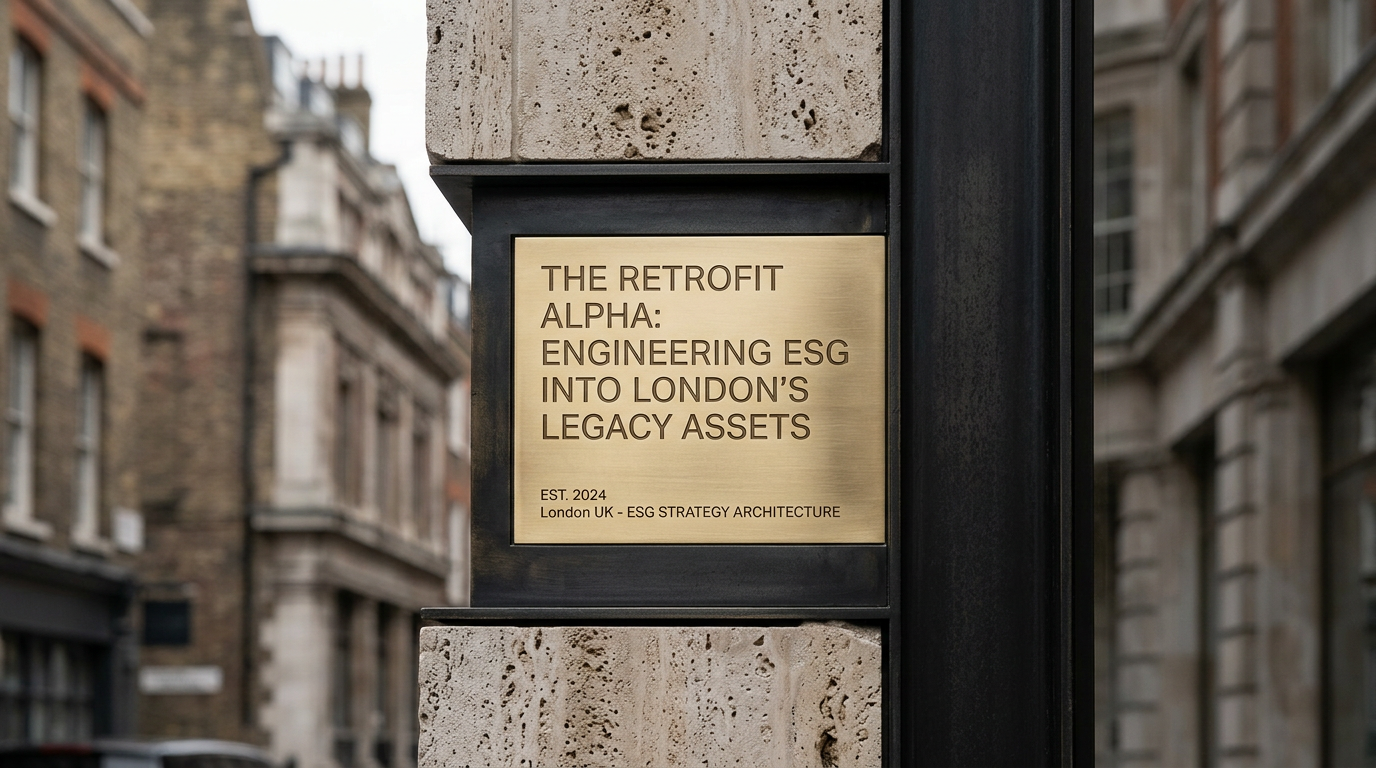
The Retrofit Alpha: Engineering ESG into London’s Legacy Assets
The great challenge of the London ultra-prime market is the ‘Heritage Gap.’ How do you bring a Grade-II listed townhouse in Mayfair up to 2030 ESG standards without destroying the very architectural heritage that gives the asset its value? This is the ‘Retrofit Alpha’—the opportunity to create massive value by solving the sustainability puzzle of legacy luxury.
The Core Driver: The Regulatory Squeeze
The driver is a combination of tightening UK energy regulations and a shift in institutional buyer requirements. The ‘Brown Discount’ is no longer a theory; it is a reality. Assets with poor energy ratings are seeing longer marketing times and lower offers. The ‘Retrofit Alpha’ is the profit margin gained by closing this gap.
The Technical Challenge: Invisible Engineering
The secret to successful ultra-prime retrofitting is ‘Invisible Engineering.’ This involves the use of vacuum-insulated panels, internal wall insulation that doesn’t compromise period cornicing, and the installation of air-source heat pumps hidden in subterranean vaults. The goal is to achieve ‘Net-Zero’ performance while maintaining ‘Heritage’ aesthetics.
Investor Implications
Retrofitting is the most effective value-add strategy in the current London market. An asset that moves from an EPC rating of ‘E’ to ‘B’ can see an immediate jump in valuation and a significant increase in rental yield. The ‘Alpha’ is found in the ability to execute these upgrades without triggering restrictive planning hurdles.
Actionable Strategy
- The ‘Under-Performing Heritage’ Play: Seek out prime assets with significant ‘ESG deficits.’ These properties are often undervalued because the current owner is intimidated by the cost of retrofitting.
- Partner with Specialized ESG Architects: Work with firms that specialize in ‘Conservation-Led Sustainability.’ The risk of a failed retrofit is the loss of the asset’s heritage status.
- Focus on ‘Health-First’ Upgrades: Prioritize air filtration and water purification. These are ‘high-impact, low-disruption’ upgrades that immediately increase the asset’s appeal to the global UHNW buyer.
Conclusion
The ‘Retrofit Alpha’ is the dominant investment theme for the next decade of London real estate. The winners will be those who can blend the prestige of the past with the performance of the future.