The Great Bifurcation: NYC's Flight to Quality in the Post-Office Era.
The Great Bifurcation: analyzing the deepening divide between NYC's distressed office legacy and the resurgent ultra-prime residential core.

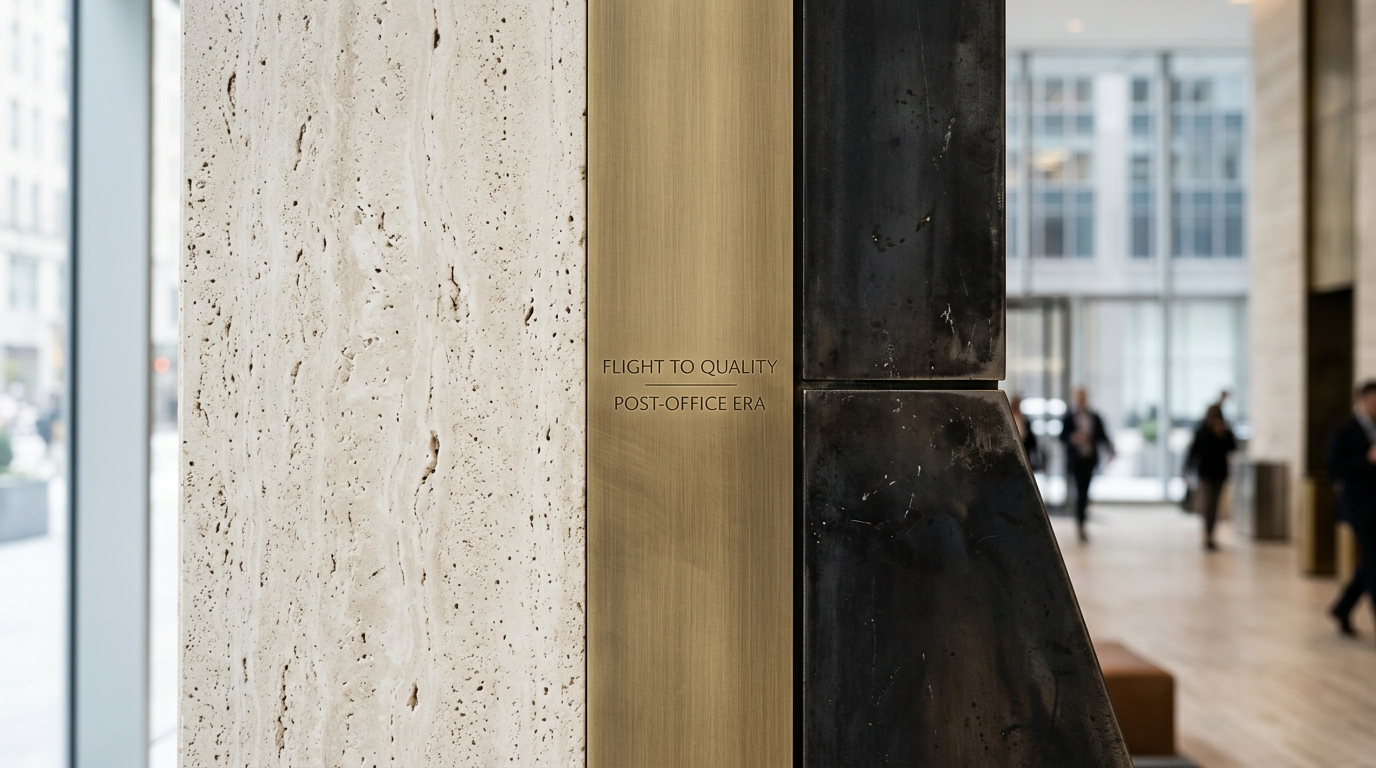
The Great Bifurcation: NYC’s Flight to Quality in the Post-Office Era
Introduction
The Manhattan commercial landscape is no longer witnessing a mere correction; it is undergoing a structural bifurcation. As the traditional concept of the ‘central business district’ dissolves, we are seeing a violent divergence between legacy Class B assets and a new tier of ultra-prime, “trophy” environments. This is the Resilience Pivot: a transition from square-footage utility to experiential sovereignty.
Core Driver: The Obsolescence of the Mediocre
The devaluation of B-grade commercial space is not a function of vacancy alone, but of ‘brown discounting.’ Assets that lack integrated wellness infrastructure, advanced air filtration, and flexible, high-spec floor plates are becoming stranded. Conversely, Class A+ assets—defined by their ability to command a premium through architectural prestige and operational excellence—are experiencing cap rate compression as UHNW investors seek safe havens.
Investor Implications
The “Flight to Quality” is an aggressive reallocation of capital. Institutional investors are pivoting away from diversified portfolios toward concentrated bets on assets that offer ‘view sovereignty’ and irreplaceable locations. In this environment, the cost of capital for obsolete space is skyrocketing, while the liquidity for trophy assets remains robust. The delta between the best and the worst performing assets in the same zip code has never been wider.
Actionable Strategy
The Adaptive Arbitrage: Target distressed Class B assets with high-potential structural shells in proximity to A+ hubs. The alpha lies in the ‘Conversion Play’—repositioning obsolete commercial shells into ultra-luxury residential or hybrid hospitality assets. Investors should prioritize assets that can be retrofitted for ESG compliance to avoid future regulatory discounting.
Conclusion
NYC is not losing its dominance; it is refining it. The era of the generic office is over. The future belongs to the trophy asset—the irreducible piece of the city that remains essential regardless of where the workforce sits.